Rivers Pulse
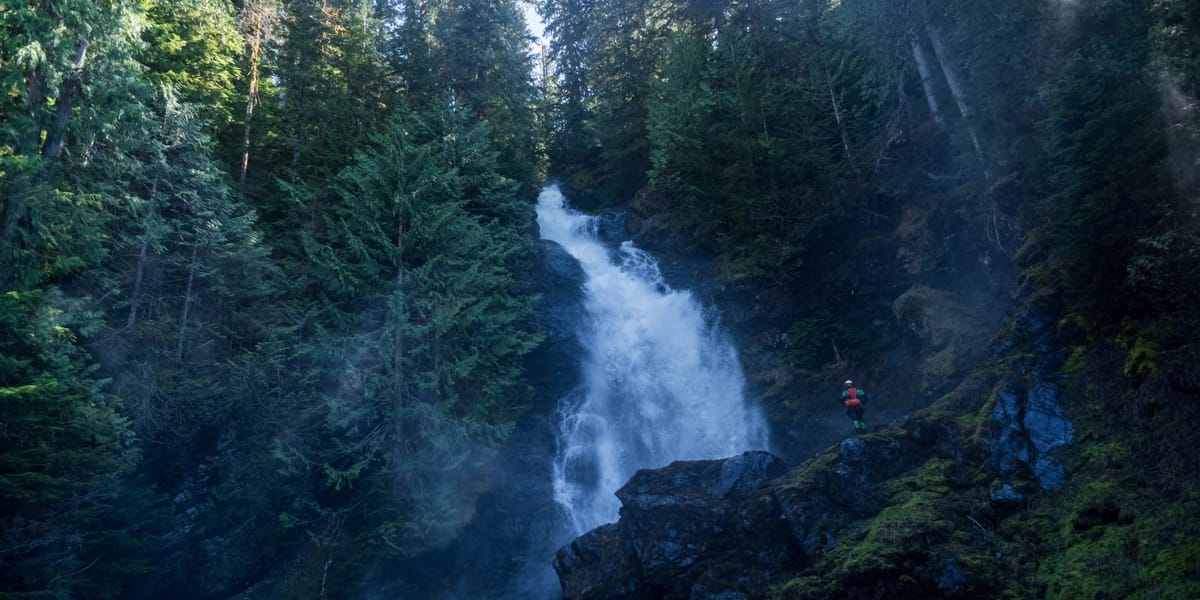
RIVERS co-founder Wil Henkel takes a personal dive into his relation to rivers.
When I think about rivers, I think about their pulse. The undulating power and grace of which they move, in poetic dances and in raw force. I almost drowned on the Middle fork of Nooksack river in early January of 2022. The dark clouds hung over the valley nestled between Kwelshan and the Red Mountains of the Twin Sisters range. We put on its major tributary Clearwater creek quietly and paddled into the main current of the Middle Fork and its “always murky water”.
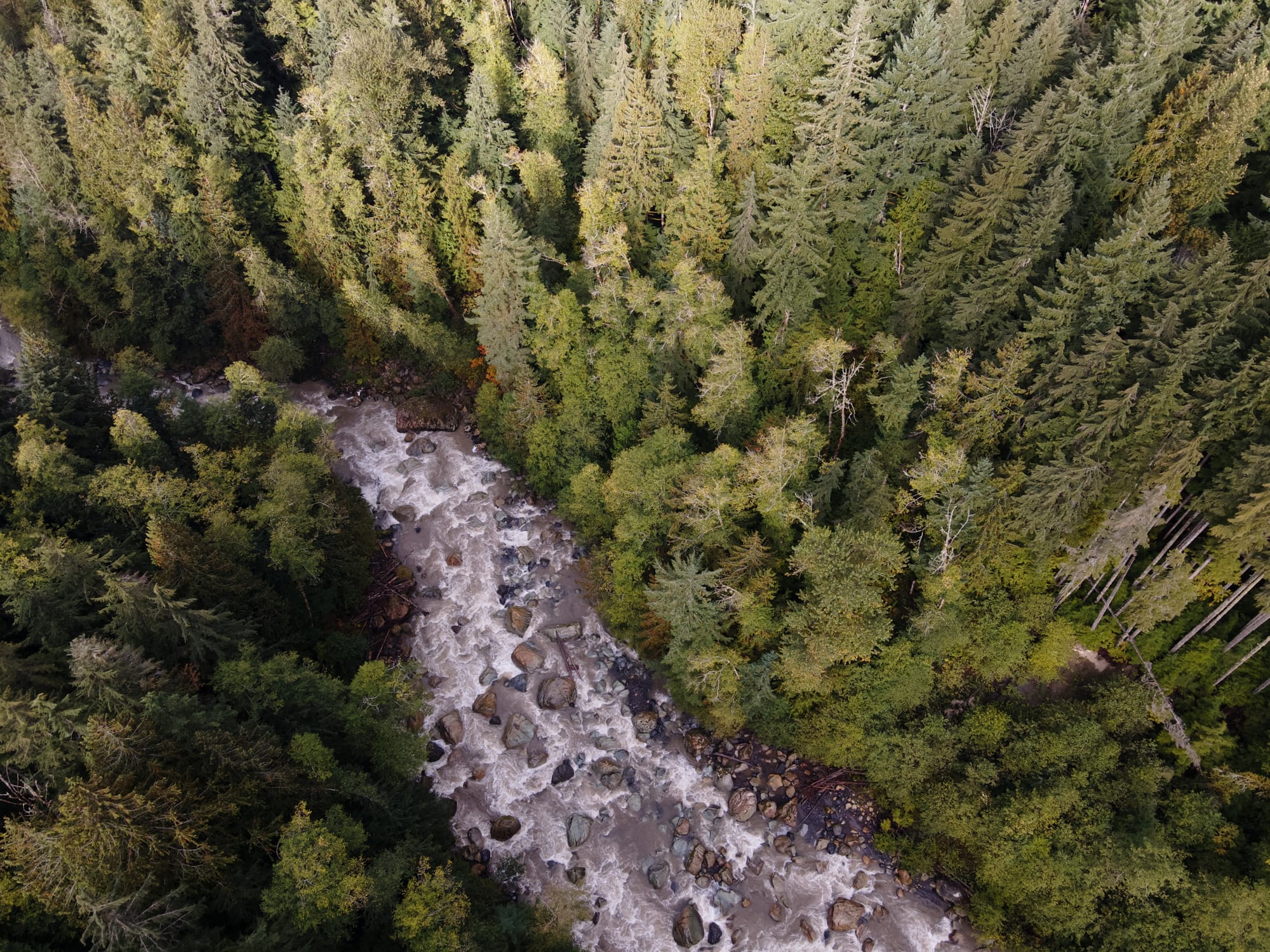
Rivers with gradient have horizons, at moments those horizons are moving undulating chaotic forces of water and hydraulics formed by the force and geology of these fluvial wonders. That day the river took a sharp turn, and so did my life. Upside down and backwards in my kayak, my friends watched as I failed to right myself through a series of class five rapids, until I lost my breath. I exited my kayak, into a blur of motion and violence. Clinging to my life, I gave to the force of the water unable to tell up from down. I saw my friends briefly chasing after me before submerging into the oblivion of torrent. I somehow found myself holding to a rock in the middle of the river. Freezing January temperatures and the sound of the raging whitewater muted any sense of self. My friends dragged me to shore. I was alive. I had never felt completely powerless, until that day. I left home and went to Ecuador, carrying what the Nooksack had taught me.
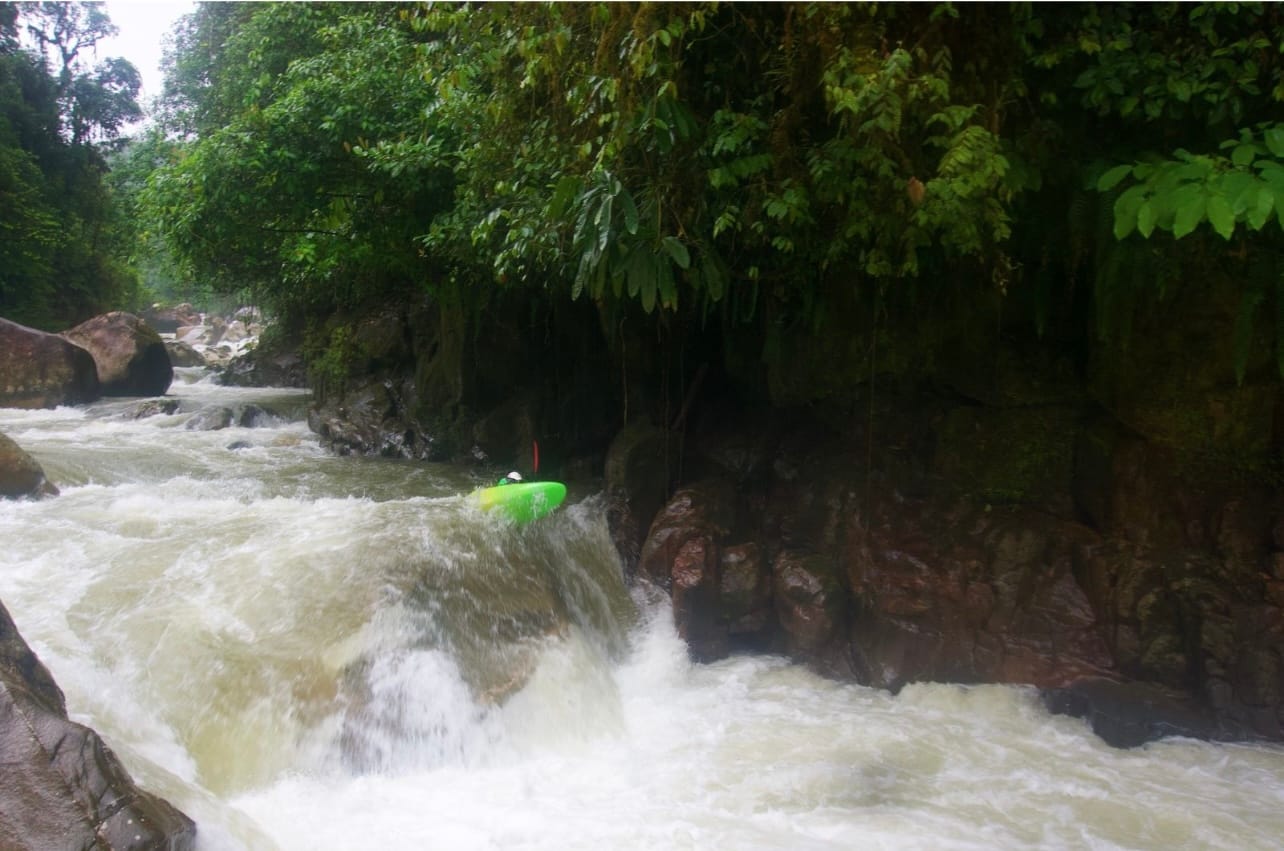
In Ecuador that same friend drug me to shore, as I clung to the back of his kayak in a river of similar power and gravity of what could have been. El Rio Quijos, its headwaters at from the remarkable often cloud shrouded volcano of Antisana, is flanked on its river left bank by the first oil pipeline installed in the Ecuadorian Amazon by the USA oil giant Texaco in the 1970’s. The Trans Ecuadorian Pipeline runs from Nueva Loja in the Sucumbios province through the Amazon along the Rio Coca, over the 12,000-foot Papallacta pass through the high Andes and down to the Esmeraldas province on the coast in the west.
Here, I once again caught my breath. On that same section of the Rio Quijos, I met Jorge, a friendly campesino who allowed me onto his finca and showed me his cascadas, over a cup of coffee we discussed the pipeline that had been installed in his early childhood that cut through his father's Finca. “Amazons Chernobyl” on the Rio Aguarico is 100 miles downstream from here, where the oil pipeline pumphouse leaves even this wildest whitewater river deafened when you paddle downstream. It was Jorge who said over his shoulder as he cut a path with his machete, “todos somos Americanos”.
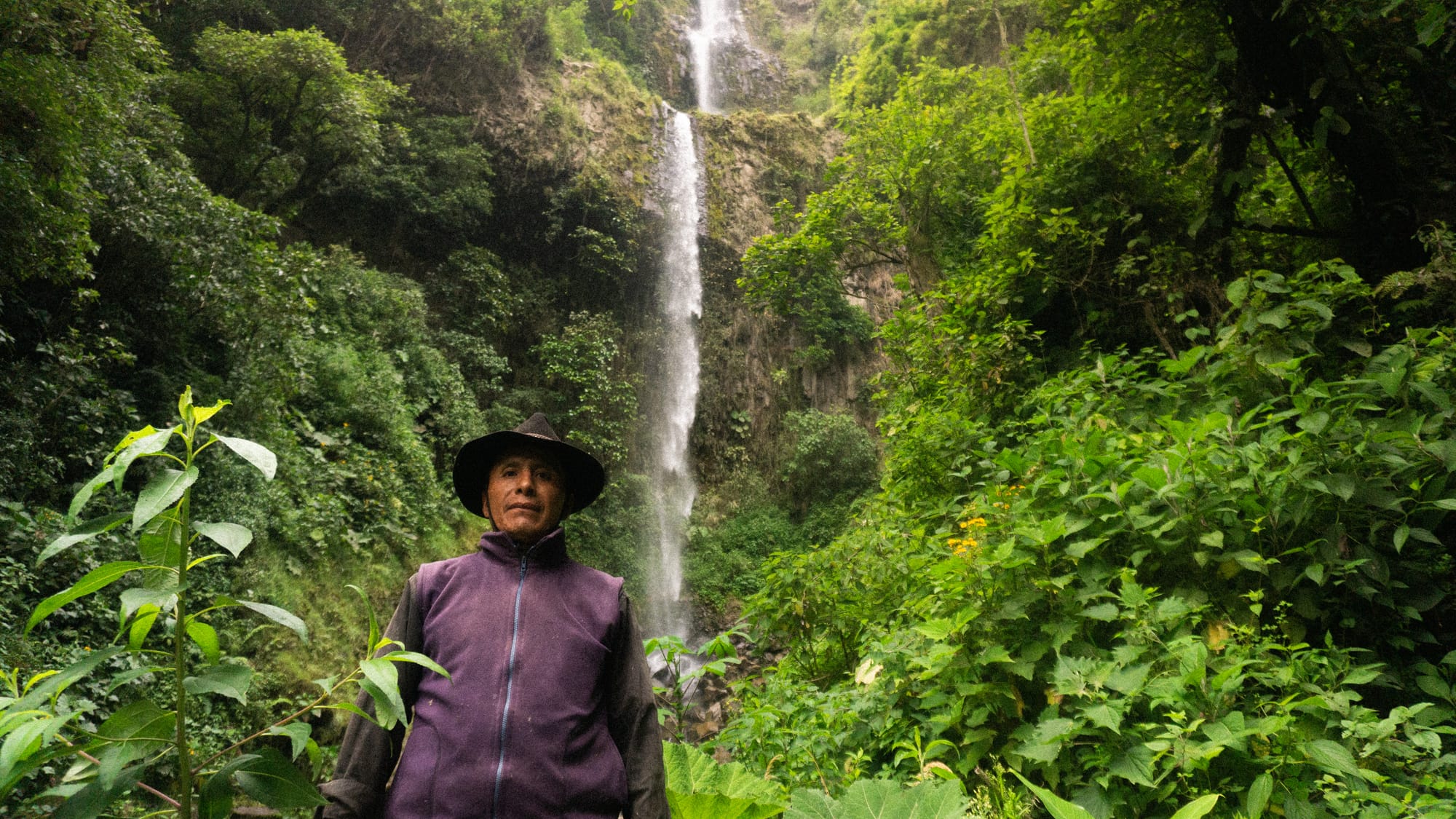
I didn’t really understand what he had said until a few weeks later, unraveling the weak notes I had taken in my journal. I believe he was speaking to a transnational relationship of all of us in the Americas, one that spans hemispheric borders from North and South America. The extractor and the extracted, these are deeply embedded imbalanced geo- political relationships, that render Jorge and I disconnected and yet inherently related.
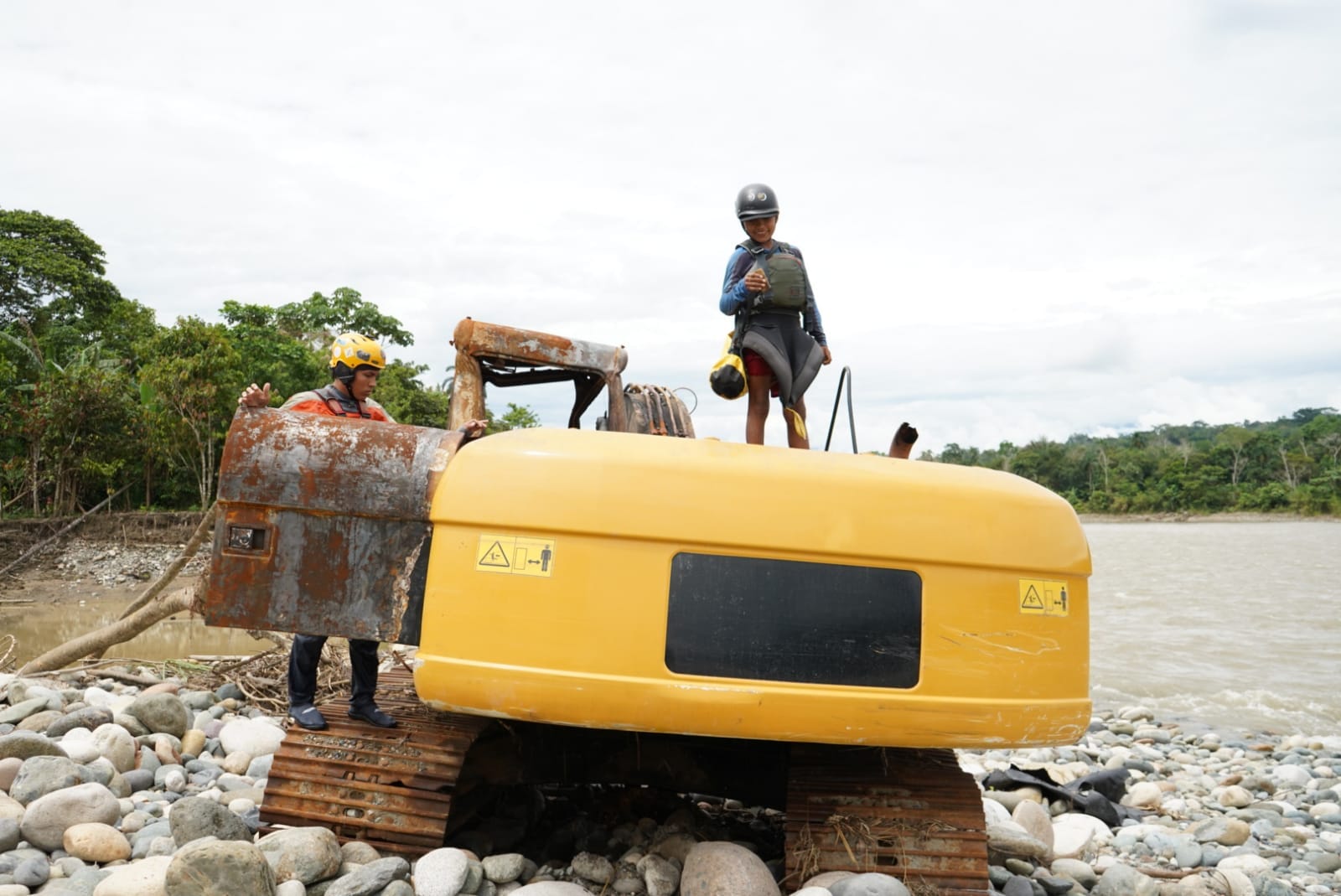
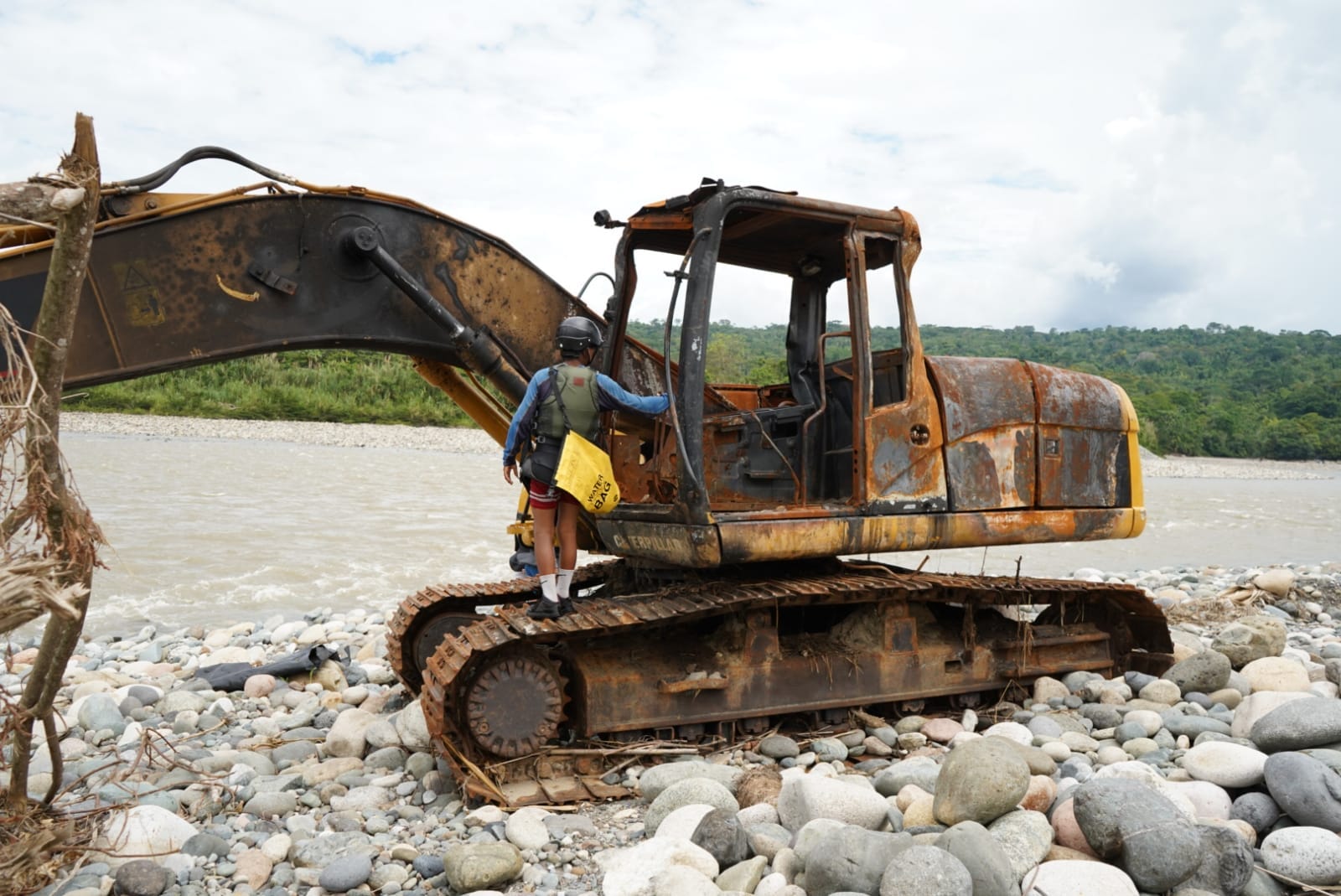
Exploring the headwaters of the largest by volume river in the world, Rio Amazonas, taught me how interrelated we all are with water. I saw miners tear up the upper Rio Napo, my friend Dona Sophia’s Finca - turned to rubble overnight. I watched her nephews swim in the mercury pools of the alluvial gold mine sites. I still don’t know how to language these images and these relationships well enough to give them justice. What I saw broke my heart to pieces – but the river put them back again. If gold is worth more than water, then we are really in trouble. I stood at the Rio Pusuno and its hydro power project that had de - watered the whole small Amazonian tributary, that didn’t provide any electricity for the surrounding communities. Filmed from a corner as the black clad police officers rolled into the communities' blockade when they had finally had enough, on vehicles of the company. Arresting and beating the community for their “terrorism”; for standing up for the rights of nature outlined in their country's constitution – criminals.
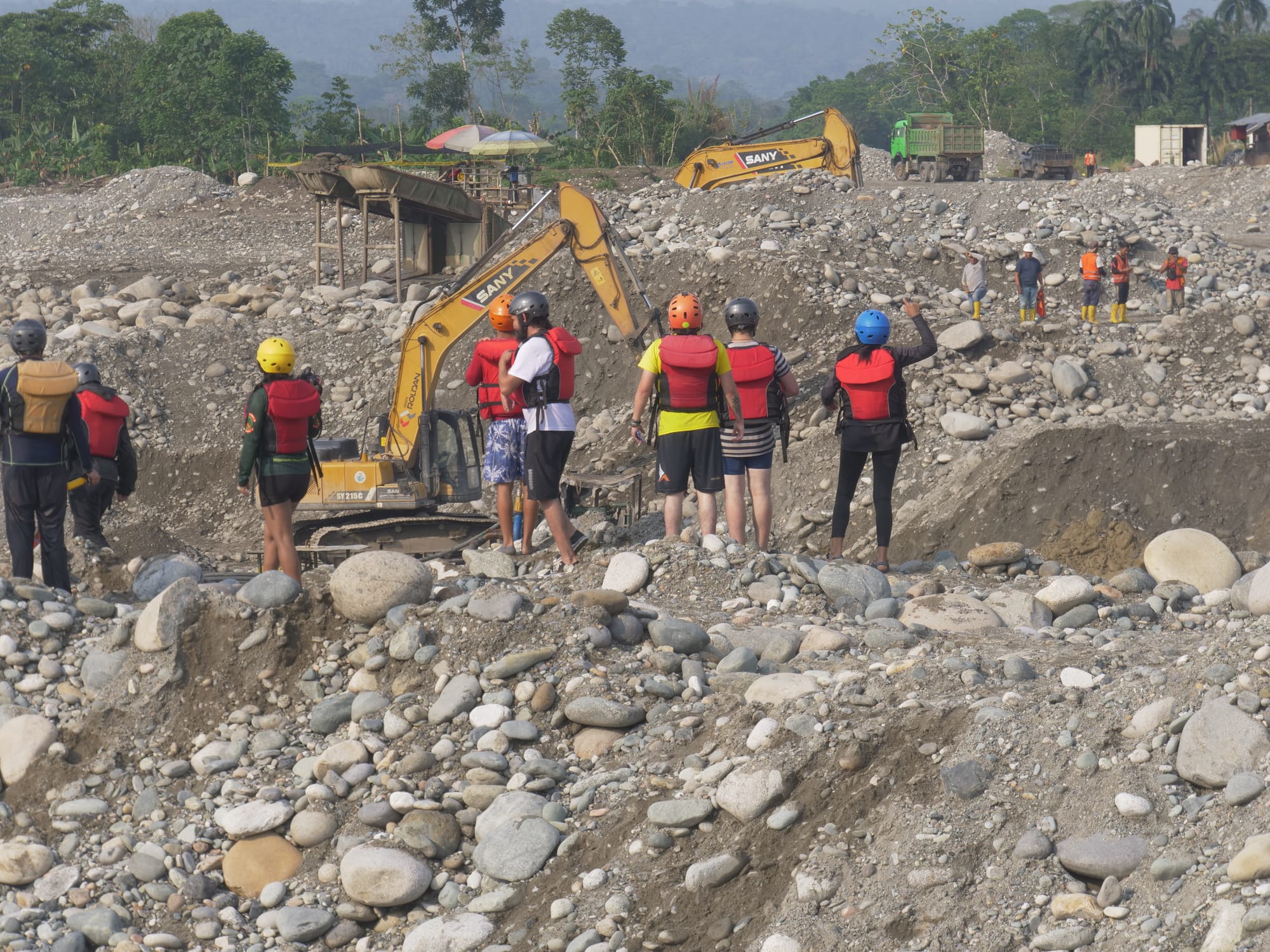
After those months the anger is my chest was brewing. The frustration of seeing my dear friends watch their homes change so drastically weighed heavy. The fact that I had the power to leave was a privileged situation and I did. I went south on buses with all my possessions loaded into the stern of my kayak. Alone, I had something to prove – how far could I go without feeling alone and dissatisfied? Pretty quickly the long views out of bus windows and random bus stations and hitch hiking to unknown rivers wasn’t as much a draw as it was some sort of personal statement to myself and to the world that I was capable. I was capable of failure and reluctant to acknowledge that.
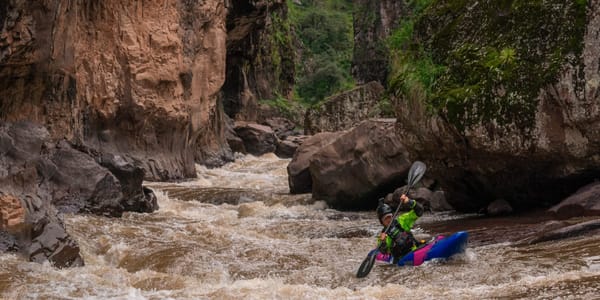
On day five of our first descent expedition of the Rio Negro a tributary to the Rio Yacuambi in the southern province of Zamora, Ecuador. I found myself entrapped in rocks, seated in my kayak, the force of the whole river came down onto my back, a small air pocket remained for me to breathe and yell “Help!”. As my Ecuadorian friend Diego, clambered onto rocks to throw me a rope to “save” my life, and he did. I swam to shore to watch my kayak with all my hopes of survival in the high Amazonian cloud forest round the bend towards oblivion. I caught my breath.
Rivers cut through me like they cut through the land. They separate parts of myself from others, and my own distortions of comfort. I miss who I was before, but I will never go back. When you see a river cut through your own perception of who you are, the options are limited in how to forget those feelings. It is better to accept the pain which you would have inflicted on your family and your friends. Then try to engage those feelings of self-destructive behavior.