RIVER VALUES
The river is our connection to life, death and rebirth in the world's current incarnation.
In this literary review, Willie Henkel, RIVERS Creative Director theorizes on River Values - while exploring his own personal river practice.
A river.
As you enter this writing on a screen - take a breath and imagine a river. A river near you, a river far, a river roaring, a river calm - an eddy that pauses in the midst of a downstream journey. Where do you locate yourself?
Imagine freshwater.
The river - is our connection to life, death and rebirth in the world's current incarnation.
I have come to love and respect the river. To know that I can’t possibly understand or quantity the life that has been formed and will be formed by these currents. I have grown angry in my body and down to my bones to think about the way rivers are treated, and still I reach for optimism, an answer to why? And then how to repair? May we find a way to move forward?
I have been searching for a method.
River as Method
Rivers can serve as both a method of study and a perspective in themselves — living systems that reflect the values, crises, and regenerative capacities of our time. They embody life, death, and renewal, incarnated in constant movement. As this creative synthesis article defines, rivers hold life source value - which refers to the relational, and epistemological potential of rivers as living systems that embody and transmit ways of knowing, being, and coexisting. This is a principle that cultural and social movements might use to situate their work, allowing rivers to function as epistemological lenses. To study rivers, then, is not to observe only ecological or hydrological forces, but to engage a philosophy of relation — one that sees movement, interconnection, and flow as ways of knowing.
In the latest work of renowned Michi Saagiig Nishnaabeg scholar, Leanne Betsamosake Simpson, the Theory of Water: Nishnaabe Maps To The Times - Simpson creates a basis for a decolonial theorization of water - namely speaking to its importance for life on earth and all human and more than human relationships that are existent on freshwater. She notes,
“Fresh water accounts for less than 3 percent of water on the planet. Of that less than 3 percent, two-thirds are stored in glaciers and ice caps. The other 30 percent is groundwater. Only 0.3 percent of freshwater is found in lakes, rivers and swamps.” (Simpson L. 2025, 50).
Rivers then are the carriers of freshwater, and thus of all life contingent upon it. From varieties of altitudes in the mountains, plateaus and forests at earth's surface they are born at headwater sources. As small beginnings they will form with others born in the surrounding areas, then they become, again and again. These fluvial powers referred to by hydrologists as “anything related to or produced by the action of a river”(Merriam-Webster 2025) create river channels. Fluvial channels and river beds come directly into contact with the geographic and geologic features of earth not limited to other cosmological and linguistic definitions of said earth, e.g. Mother Earth, Pachamama, Yaku Mama or others within the Ethnosphere (Davis 2009) and thus form them in relation to humans.
Think again of the river you imagined. Is it here with you?
Humans rely entirely on this source of life - the veins of our earth - in order to exist, to create, to destroy, and to become again. It's rivers themselves that Simpson calls “connectors” (Simpson L. 2025, 154) just think about the correlation of water between the two bodies themselves, “The earth is 70% water. The human body is 60% water.” (Simpson L. 2025, 50). Today, the conventions of a decolonizing Cultural Anthropology and some public dialogue are beginning to recognize that the river is alive (Macfarlane 2025). Seeing value in the river beyond economic or even scientific quantifications which leads to asking what is “life source value”? And how do rivers inform current epistemological views?
Rivers in Documentation and “Research”
The basis of this argument - the inherent value of river and watershed perspective in the context of decolonization- has to be framed in reference to how rivers exist within political, social and ecological contexts. As a writer and artist I find safety in the year 2025, financially and intellectually in the field of cultural anthropology - which following the 1999 publication of Decolonizing Methodologies by Linda Tuihui Smith has had a new generation of anthropological scholars reading her words to inform their professionalization. In the now renowned and heavily cited book, Smith explores a set of questions in relation to the foundation of the act of research itself,
“Whose research is it? Who owns it? Whose interests does it serve? Who will benefit from it? Who has designed its questions and framed its scope? Who will carry it out? Who will write it up? How will its results be disseminated?” (Smith 1999)
The work of Smith and her reflections on the nature of “research” as an inherently colonial construct has influenced other Indigenous scholars like Audra Simpson, whose renowned work, “Ethnographic Refusal: Indigeneity, ‘Voice’ and Colonial Citizenship”- opens with a reflection on anthropology as a symptom of colonization, framing ethnography itself as a tool of research entangled in Anthropology's colonial project of “giving voice” to the colonized (Simpson A. 2007). She then offers a personal reflection on the concept of voice itself—examining how - as an anthropologist working within her own community - she grapples with the tensions between representation and self-determination. Through this lens, Simpson raises critical questions about domination, sovereignty, and citizenship within Indigenous nations, challenging anthropology to confront its colonial inheritances while reimagining what ethical engagement might look like from within Indigenous frameworks.
For the basis of this argument, I draw on the concept of voice she developed early in the article, and I will extend that idea toward an ethnographic practice centered on rivers—what I am calling river voice. This developing praxis raises critical questions about the political and ethical stances taken within ethnographic work when the subject is not a human community but a living watershed. What would it mean to engage a river ethnographically? Could such a practice reproduce the same colonial logics that Simpson critiques, or could it instead open a space for relational, reciprocal listening? Within Indigenous frameworks, rivers are already more than political - storied beings, bound up in questions of land claims, kinship, and belonging. So whose river are they? Are they the Earth’s river, a people’s river, or a shared body? And if one conducts ethnographic study with a river, does that act implicate the people in relation to it? Who, then, speaks for—or with—the river? I find Audra Simpson's concept of refusal (Simpson A. 2007) compelling here, not just as an Indigenous politic, but as a frame that could be extended toward the river themselves—an ethnographic refusal from the river. Such a framing could challenge the human-centered assumptions of research and invite a more reciprocal understanding of relationality, sovereignty, and voice within freshwater worlds. Still I wonder, would ethnographic practices when shifted toward relation answer these deeper questions?
River Ethnography & More-than-Human Voice
Rivers have long been sites of Ethnographic research whether named or not, as a result of human and ecological relationships centered in riverine communities. The developing fields of decolonial ethnography, sensory ethnography and multispecies ethnography must look to rivers as potential collaborators that embody and transmit ways of knowing, being, and coexisting.
Marianne (Ria) Jago’s work, at Australia's Sunshine Coast University, is one form towards an answer to the aforementioned question. The work, according to her research bio, is said to respond to the invitations of her collaborators, those being, “River, stone and water” to make “kin-centric relational experiments, like song-making with place, to hear and respond to its guidance for addressing ecological breakdown”. Her open research question is as follows: “What do you want me to know, River?” (Jago 2024) - In response she has co-created a sensory auto-ethnographic practice where the “river leads the way” (Jago 2024). Jago's work provides an attempt to answer the question of the use of ethnographic practice when shifted to more than human relation (Rodríguez Garavito 2024). Questions remain about how this work is translated into the academy and received.
To further develop this question, it is useful to consider the work of Eduardo Kohn, an ethnographic researcher whose fieldwork in the village of Ávila—on the flanks of Volcán Sumaco, at the headwaters of several Río Napo tributaries—among the local Napo Runa Kichwa community culminated in his widely cited multispecies ethnography How Forests Think. Kohn introduces the concept of “semiotic life” (Kohn 2013) to argue that all living beings are capable of interpretation. These interpretations—expressed through signs or responsive actions—form the basis of semiotic life. For Kohn, this means that all living things think in their own way: every being interprets its surroundings and acts upon the meanings it perceives.
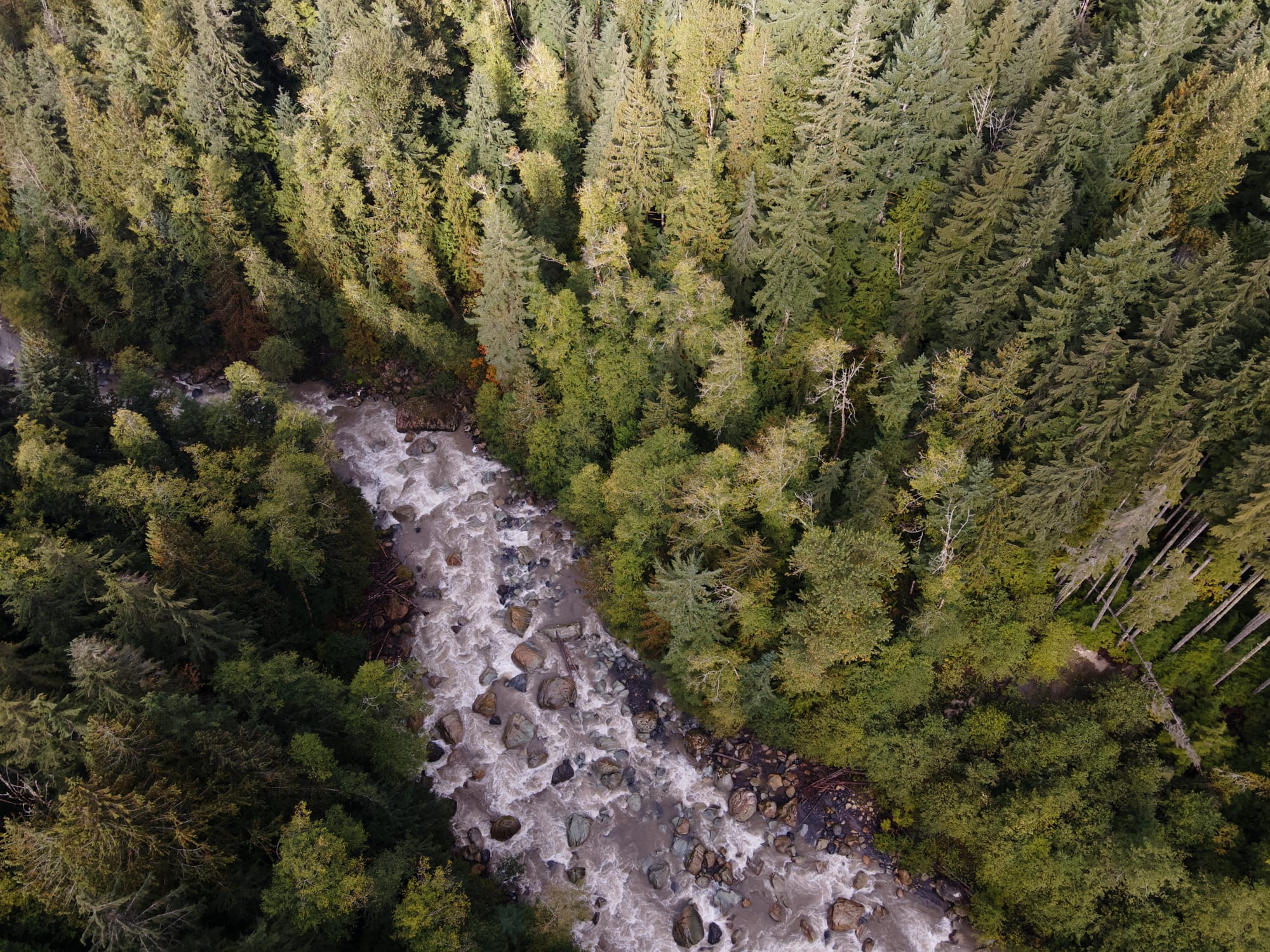
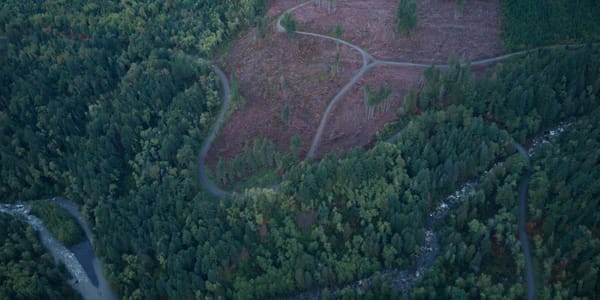
The river reacts. Rain high on the foothills of Kwelshan and the water rises within minutes, the creeks running through industrial forest lands. Douglas Fir plantations. The amounts are quantifiable: one inch of rain overnight, north from the Strait of Georgia the storm rose past the Fraser mouth and up skimming the Van Zant Dyke before falling again into the heart of the Middle Fork Basin. Reactions and counteractions. Water and rain and a NOAA gauge all point to the same conclusion: the river SPIKES. 100 cfs at 1:30pm and 2200 cfs at 2:30 pm.
For Kohn, language itself can be understood as a subset or reaction to thinking—where thinking is defined as the response to, or transmission of, signs and signals. If we consider what we know about mycorrhizal networks and forest ecologies, it becomes evident that all living things within a forest are connected through this process of “thinking”: the exchange of information, energy, sound, soil, are then forms of communication. If we were to substitute the word forest with river, might we find the same dynamics at play? What, then, would the river think?
Beginning with Linda Tuhiwai Smith’s question of “whose research?” (Smith 1999), decolonial thinkers can interrogate how traditional studies of riverine communities often reproduce extractive frameworks and obscure local sovereignties. In response, scholars might turn to the emerging work of sensory ethnographers such as Marianne Jago and multispecies ethnographers like Eduardo Kohn to see how these theories are being practiced today. Drawing on their influence, we can begin to conceptualize how rivers themselves may hold a significant place in the future of ethnographic research.
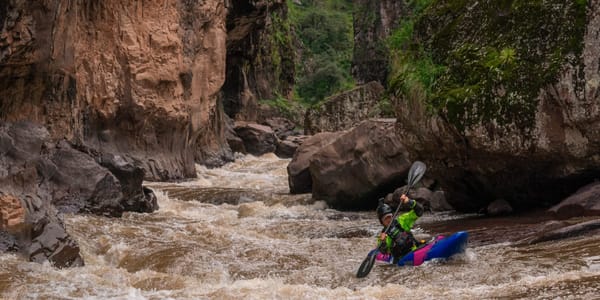
When I think about rivers, I think about their pulse. The undulating power and grace of which they move, in poetic dances and in raw force. I almost drowned on the Middle fork of Nooksack river in early January of 2022. The dark clouds hung over the valley nestled between Kwelshan and the Red Mountains. We put on its major tributary Clearwater creek quietly and paddled into the main current of the Middle Fork and its “always murky water”. Rivers with gradients have horizons, at moments those horizons are moving undulating chaotic forces of water. That day the river took a sharp turn. Upside down and backwards in my kayak, my friends watched as I failed to right myself through a series of class five rapids, until I lost my breath. I exited my kayak, into a blur of motion and violence. Clinging to my life, I gave to the force of the water unable to tell up from down. I saw my friends briefly chasing after me before submerging into the oblivion of torrent. I somehow found myself holding onto a rock in the middle of the river. Freezing January temperatures and the sound of the raging whitewater muted any sense of self. My friends dragged me to shore. I was alive. I had never felt completely powerless, until that day. I left home and went to Ecuador, carrying what the Nooksack had taught me.
Are Rivers Dying?
With all this life talk, what are we to do with death? In our anthropogenic times, the river is not the representative of only life but also of death - what I define here as the destruction of life wrought by colonial capitalism. In order to avoid too much duality I will merge the cohabitation of life and death not necessarily as duly opposed forces but as codependent circumstances that can be harnessed by those with hegemonic power to preserve or destroy.
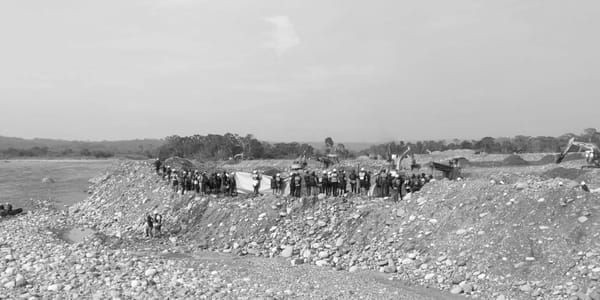
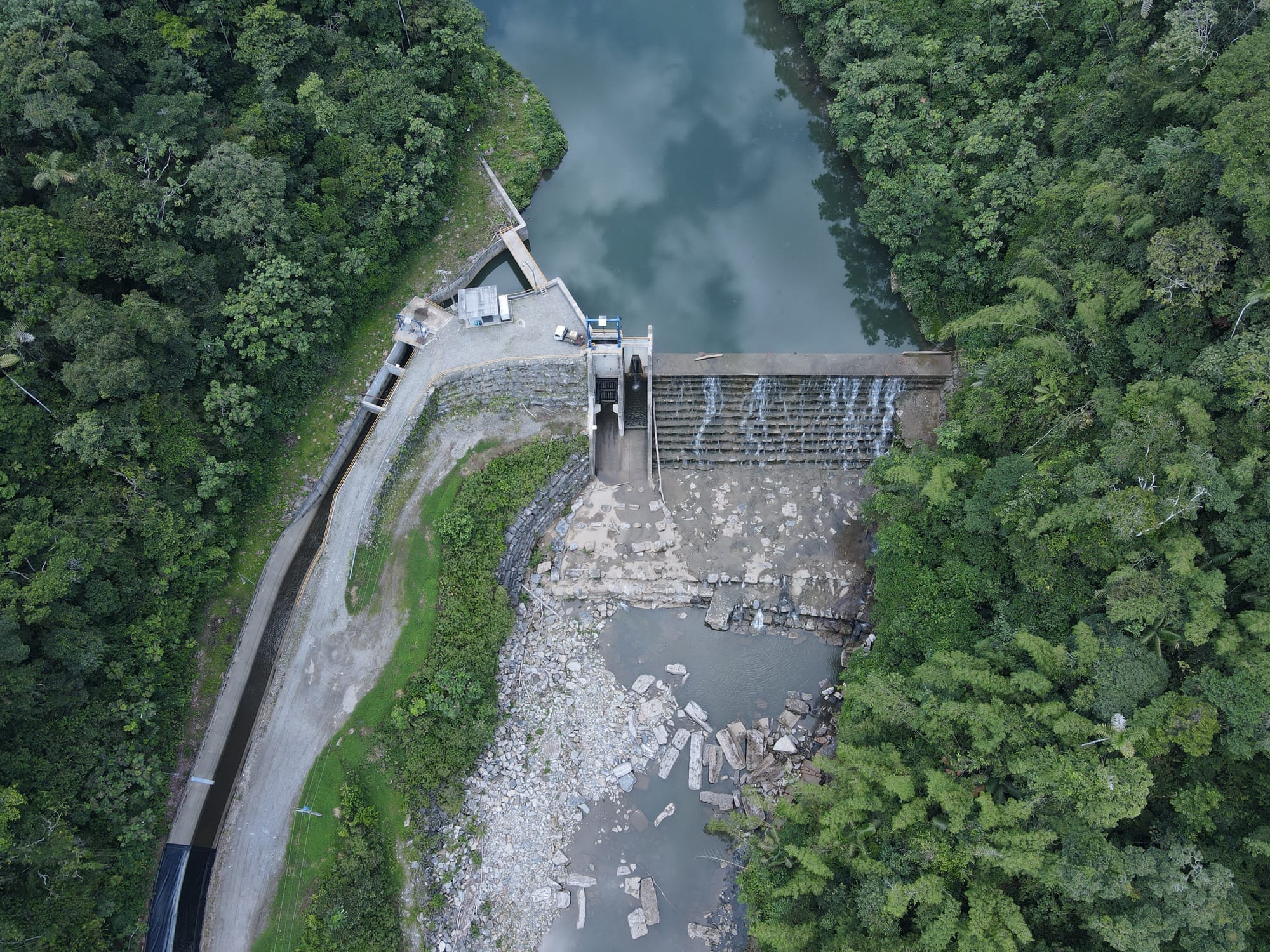
One of the first times I used a drone for documenting extractive capitalism, I was in the community of “Alto Pusuno” two hours drive from the community of Pano where I lived for 12 months. The community is formed of a mezcla of Mextizo and Kichwa families, many of whom had historic land claims before the road was opened to the heart of the river valley in 2012, for Ecuador's largest construction conglomerate CVA’s development of the 22 MW run of the river hydroelectric project “Pusuno HPP”. At least 10 community members stood over my shoulder in the heart of the communities paro - a road blockade meant to keep CVA’s workers from entering to operate the hydroelectric power plant. For many of the community members it was their first time seeing a drone in use. It was also the first time they had seen the hydroelectric dam dewatering the river for 12 kilometers. (Sonora Newsroom 2024).
Documenting extraction with drones in river environments has become a staple for environmental groups and activist networks using consumer drones predominantly manufactured by the company DJI. In the article written by Adam Fish, “Degenerate Ecocinema: Indexing Entropy with Drones. Visual Studies”, he proposes a rather nihilistic argument of the role of documentation in anthropogenic ecological collapse. At various points he is able to correlate the concepts to rivers themselves. He implicates rivers by naming that tools used for documenting extraction are entangled in the flow of global capital, implicating environmental art and research in the same systems they critique.
“The Mersey River’s vibrancy remains but it is put in the service of global capitalism, expressed through shipping containers and dredging, bulkheads, and corroding docks. The millions of drones that have thus far been manufactured globally since 80% of which have been made by the company DJI. . . have travelled in containers through river ports. . . Drones, ports, containers, capitalism – all are contingent upon the flow and fluidity of river and oceanic elementality.” (Fish 2022)
What Fish speaks to here is a complex relationship between documentation, technology and the economic system of goods transfer and their inherent relation to industrial river systems. These rivers become “a confluence of nature and culture”, where like the Columbia River, the Snake River, the Skagit River, the Colorado River, and approximately two thirds of all of the earth's large rivers are dammed, either for the electricity (used for manufacture and development), flood control, or reservoirs for transport. Meanwhile, in the context of the Columbia River, “Indigenous villages, fishing falls, and burial grounds are flooded in the process.” (Fish 2022).
Are these rivers as Leanne Simpons calls them, “Rivers incarcerated into hydroelectric dams” (Simpson 2025) dead? Or do the Salmon slamming their heads on the concrete wall and dancing in the turbid spillway waters of the 6809 MW, 550 foot tall Grand Coulee Dam represent the life and abundance that was and is if not suppressed and "incarcerated” by hegemonic powers?
“Longer in space and time than Empires, rivers rise and fall. And this maritime river, because of the melting of polar ice, will rise. Additional dredging, damming, fortifying, and other measures will be devised to keep the water that consumes history away.” (Fish 2022)
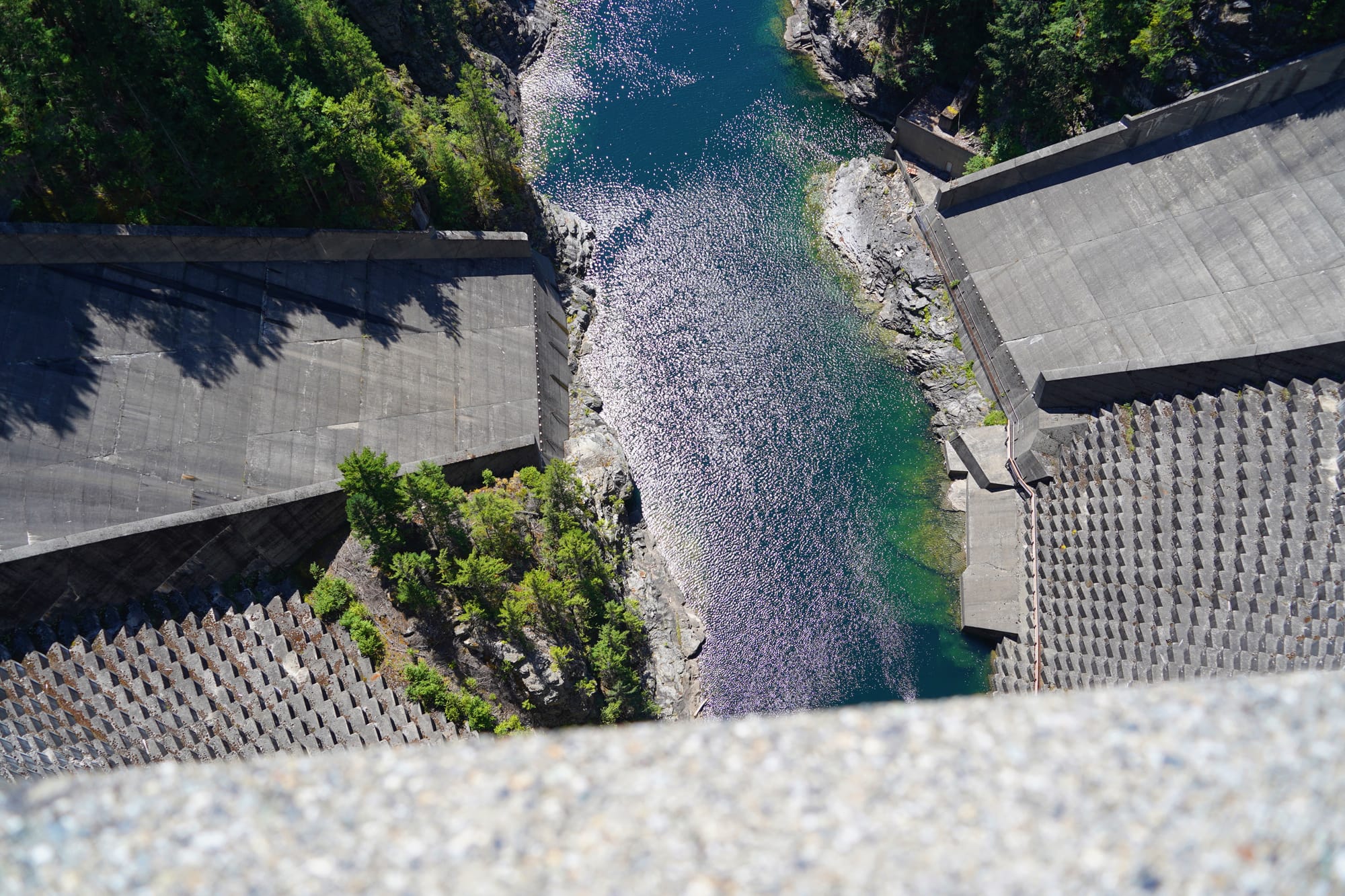
These rivers. Forming. Becoming. I can't write with the maze of my twisted thoughts. I spend time in my academic brain trying to situate these arguments and sound smart enough to get by, when I really just want to beg the question: how do we honor water?
Then the response I needed to hear. The river is forming and becoming again.
Rivers as Backdrop
This next section explores how rivers function as the physical and symbolic backdrops to humanity’s greatest questions — of origin, belonging, change, and survival. Rivers and watersheds form the foundation of human civilization. They have shaped our settlements, mythologies, and collective sense of place. They play an integral role in the development of cosmological, social, and relational dialogues. We see this relationship reflected in the cultures that embody the form of the river — and in those that have turned away from it. Settler Colonial societies, in particular, have long viewed water and rivers as forces to be controlled, diverted, and engineered in service of colonial expansion and capitalist growth. To examine this tension, I turn to works that contrast these ontological worldviews — exploring how different ways of relating to water and rivers manifest within the Salish Sea watershed.
The Salish Sea watershed offers a living example of how scientists, educators, and Indigenous communities collaborate (or don’t) across boundaries to understand and steward a shared hydrological system. Within this interconnected estuarine network, the Fraser River stands as its largest freshwater tributary and a vital artery of cultural and ecological life. In his article “‘Othered’ Land Reclamation: Decolonization in Anticipation of Another Great Flood,” Fraser Valley–based architect Arthur Leung (2021) positions the river as both geographic and conceptual backdrop to his work. He begins by reminding readers that “rivers are formed as sculpted valleys filled with glacial meltwaters. The Fraser River was born in this way approximately 11,000 years ago. Indigenous peoples began settling along this river in the Fraser Valley and Fraser Canyon.” By grounding his argument in the geomorphological and historical formation of the watershed, Leung frames the Fraser not simply as landscape but as a living archive of relation—a site where the making of place, people, and design are inseparable. His work reimagines the river as an active collaborator in shaping how we inhabit and think through land within the greater Salish Sea watershed.
The river is always the backdrop in the same way that I am today able to create threads within this writing - between rivers and watersheds in order to extrapolate and argue my points that rivers themselves are critical, and potentially the ultimate carrier of the future of life on earth. To work with the river, is to view the hyper-local and extrapolate the freshwater movement to the nature of life itself in a global context.
When you close our eyes and think of a river map, what do you see?
Rivers Maps
Maps have been wielded as colonial tools of domination, using extractive understandings of river systems. Through mapping, colonial governments impose control—redrawing and renaming territories, fragmenting Indigenous lands, and re-engineering waterways. Mapping thus became a technology of control—restricting, diverting, and disciplining the flow of rivers themselves. Yet the question remains: how might rivers be maps in their own right? How can we shift from viewing water as a force to be managed, toward an understanding rooted in respect and adaptation?
Simpson offers a profound response. “The river runs through my body and tells the story of my existence,” she writes, positioning water not as an object of study but as a being within herself - a relation. Elsewhere she observes, “Our river is flowing from my eyes... shattered into dams and lift locks, pipes and pumping, pools and sprinklers.” Through these metaphors, she makes visible how colonial infrastructures fracture not only ecosystems but also emotional, spiritual, and cultural relations to water. Leung’s work further illuminates how “Natives were dispossessed through the hegemonic colonial conceptualizations of territory and property, using maps as a tool of dominance and segregation”. Both Simpson and Leung expose how colonization has augmented spatial awareness and disrupted relations.
In response, artists, designers, and scholars are forging new practices of counter-mapping using rivers. Installation artists and researchers in the Yangtze basin describe interactive installations as “ participatory art along river basins function as social infrastructure — convening publics, mediating knowledge, and enabling collective stewardship.” (Dong, Jia, Haoyuan Du, and Xu Huang 2025) These artistic methodologies transform both participants and spaces, merging emotional and ecological engagement. Together, these practices reorient mapping from domination to relation. Through counter-mapping, artists and scholars reclaim the cartographic imagination as a decolonial tool—centering life source values of rivers and watersheds.
I hold onto your words now. Permission to divulge... Permission.
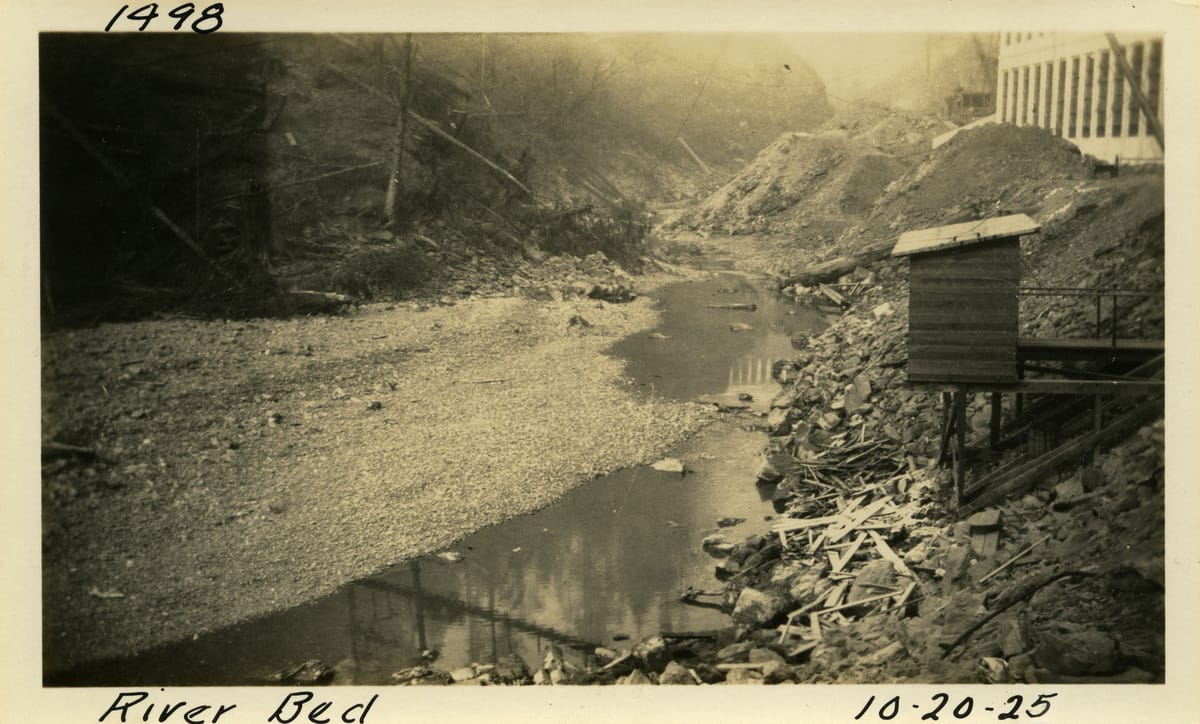
It was that same year that I had that nde on the upper middle fork that I began a practice of permission, if not permission than a humble acceptance of my location and the doubts and dreams that have come from these embodied encounters with water. It was this encounter with what could have been, my own death? These questions ran, did the river let me live? And if so, what did they want me to know? I remember blaming my father. Blaming my father. He was so closed off in my childhood. Emotional wall. removed. distant. "What the fuck dad!" I screamed at the river. I was reaching for the feelings of freedom he had in the mountains with his friends. Their feet and crampons immersed in the frozen molecules, the headwaters of the river. That reach almost took me. Slow down and listen now. "Thanks for letting me go. Thanks for letting me live - What can I do for you?”, I wondered often aloud. Walk - from my kayak to the dismantled dam, pacing, holding my breath, breathing again, letting go. "Hello. I am here again”. The concrete poured in 1963, the year my grandparents moved west. A city water right for water diversion, a tunnel through the mountain side, my newborn body in the hospital, first tastes to my lips - first bath water - from this river forced through an industrial pipe. "I am here again, I come with respect".
River Values
So how does this all become embodied in practice? Recognizing rivers as living social-ecological processes reframes research ethics, policy, and artistic practice toward reparative, watershed-scale action. When we begin to methodologize the river — to think through the watershed as both framework, teacher and relation — we are asked to consider where we locate our “work”: as individuals, as collectives, and as members of a larger species body. The river demands that we situate ourselves, and to locate the river demands that we know water.
Through riverine contexts we gain the capacity to view social and political forces as fluid and transboundary - existing in and mirroring the watershed that we inhabit. Thinking like a river tethers us from the hyper-local to transboundary and to the planetary - just as rivers do. Taking the perspectives of a river shifts the academic, the worker, the artist from the self to the totality of the self within a watershed. Because as Leanne Betsamosake Simpson says, “all life shares this water.” (Simpson Leanne 2025 50). These are words of our times, our pasts and our possible futures.
RIVERS Creative Director, Willie Henkel, is a masters student in Western Washington Universities Department of Anthropology. His focus in on "Ethnohydrology" - exploring human cultural relationships to freshwater riverine ecosystems. His local inquires into these growing questions can be found here on the Nooksack.