Let the Water Do the Work: Rafting Explorer Peter Fox Reflects on a Life in the Current
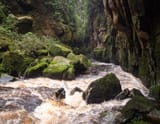
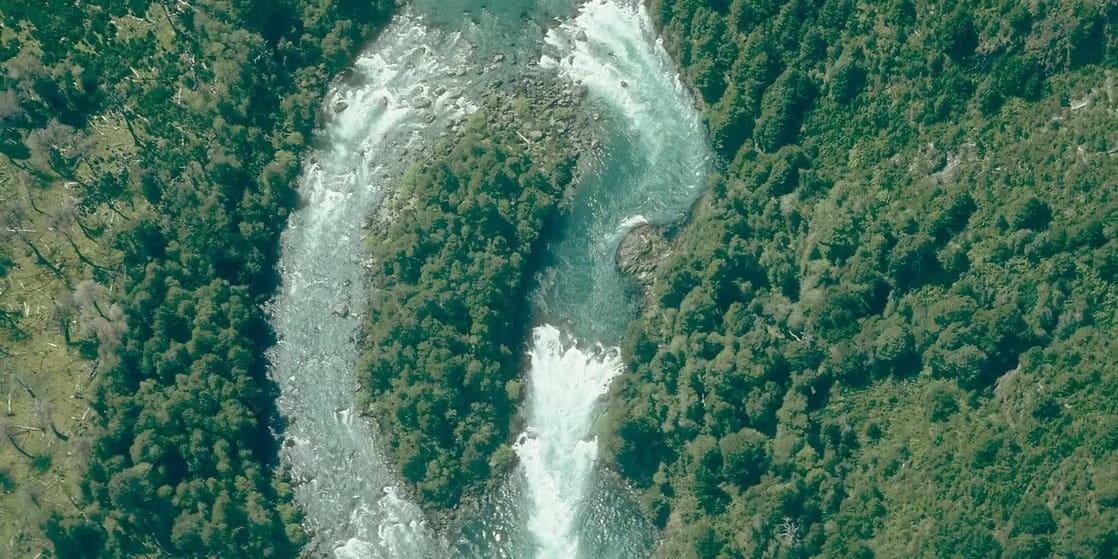
In this exclusive interview, Peter Fox, author of the freshly released nonfiction memoir and ode to rivers, Let the Water Do the Work — sits down with RIVERS Creative Director Willie Henkel.
A Conversation with Peter Fox
On a clear winter afternoon, I called Peter Fox to talk about rivers, exploration, fear, and what it means to let a river’s current shape a life.
What struck me immediately was that Peter doesn’t just write like a storyteller, he speaks like one. His sentences carry the cadence of someone who has spent decades reading water, weighing consequence, and living inside moments that demanded full presence. There’s a kind of awe in his voice, the kind that only comes from intimacy with wild places.
It’s clear that the river has altered him. Not just in experience, but in temperament. In the way he returns again and again to presence — to flow — as the real gift of a life spent rowing.
I, for one, am grateful he took the time to write these stories down. As Peter says, Let the Water Do the Work is more than a memoir; it is a tribute to the lineage of river runners who came before him. Through his words, he pays homage to the history of river running while reminding us that the river is still teaching.
Willie: What was your first rafting exploration?
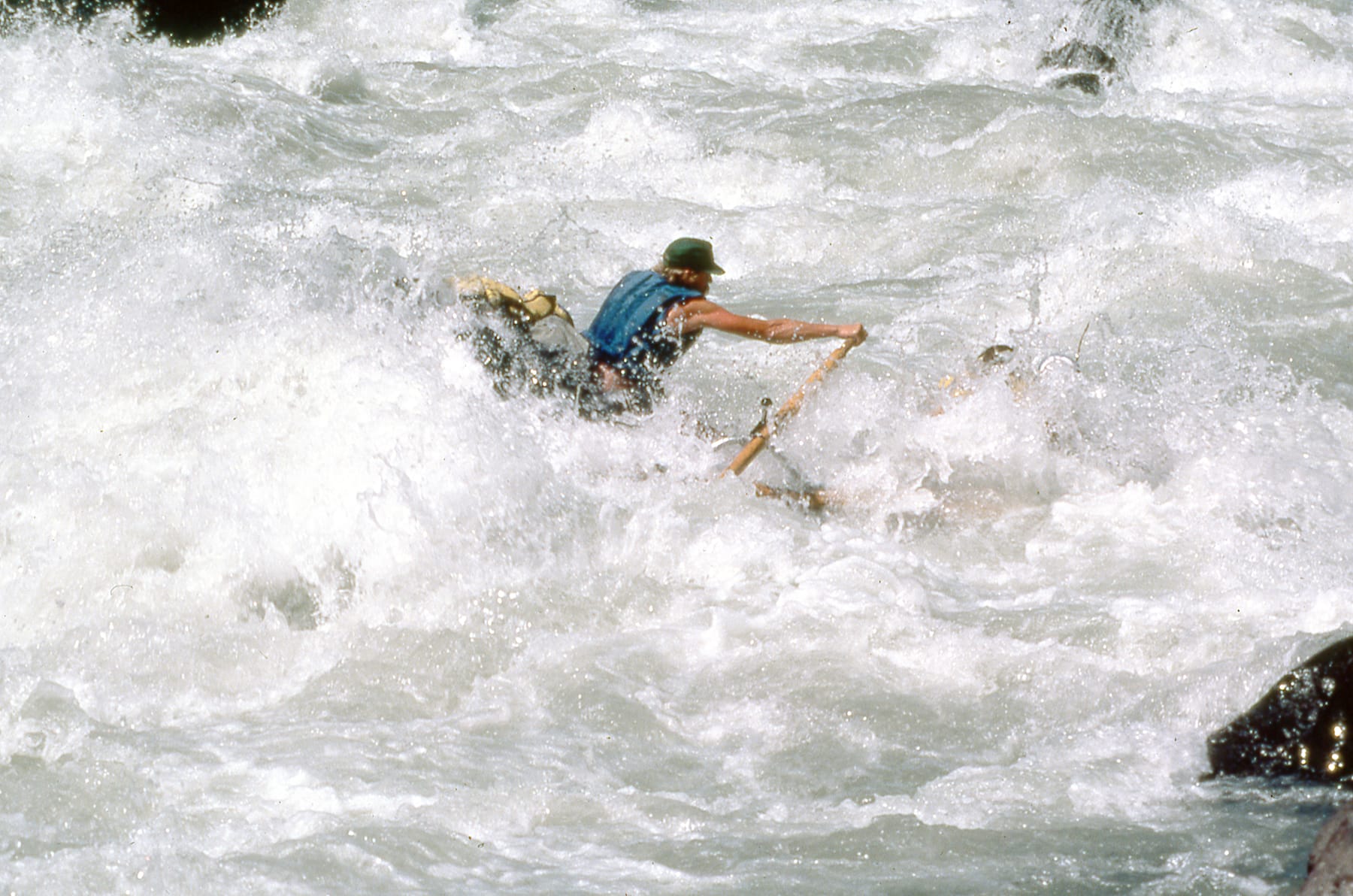
Peter: As far as explorations in terms of first descents, that trip down the Tuolumne at a pretty unprecedented water level (13,500 cfs)— no one had ever rowed it or kayaked it at that water level. So that was an exploration of sorts. We knew the rapids, but we had no idea what the river was going to be like. And back in those days, we were rowing bucket boats. So it was a pretty big jump for a bucket boat.
And then my first season on the Bío Bío, I hit Nirecco Gorge — I didn’t know it until years afterward — but it was the highest water level it would ever been run. We had to start from scratch to figure out how to run the big rapids because the normal routes were completely out of the question for a raft, let alone a bucket boat.
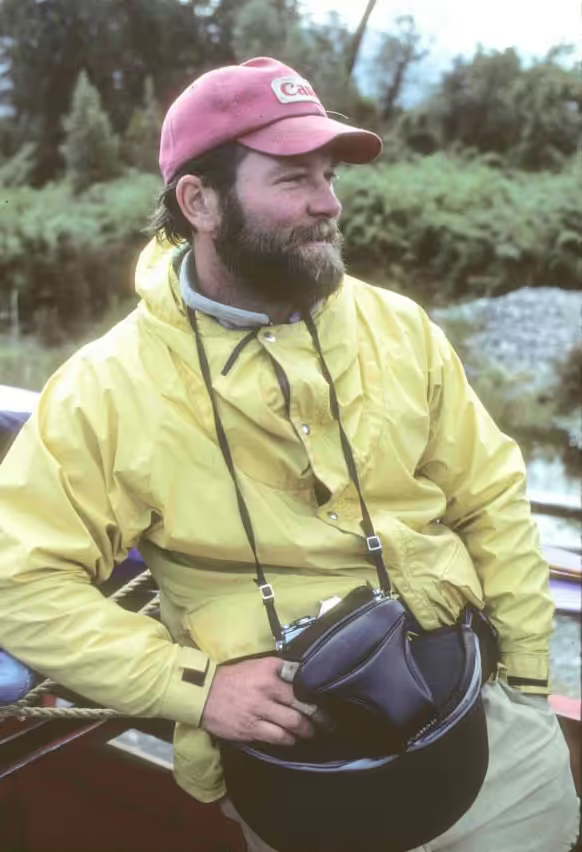
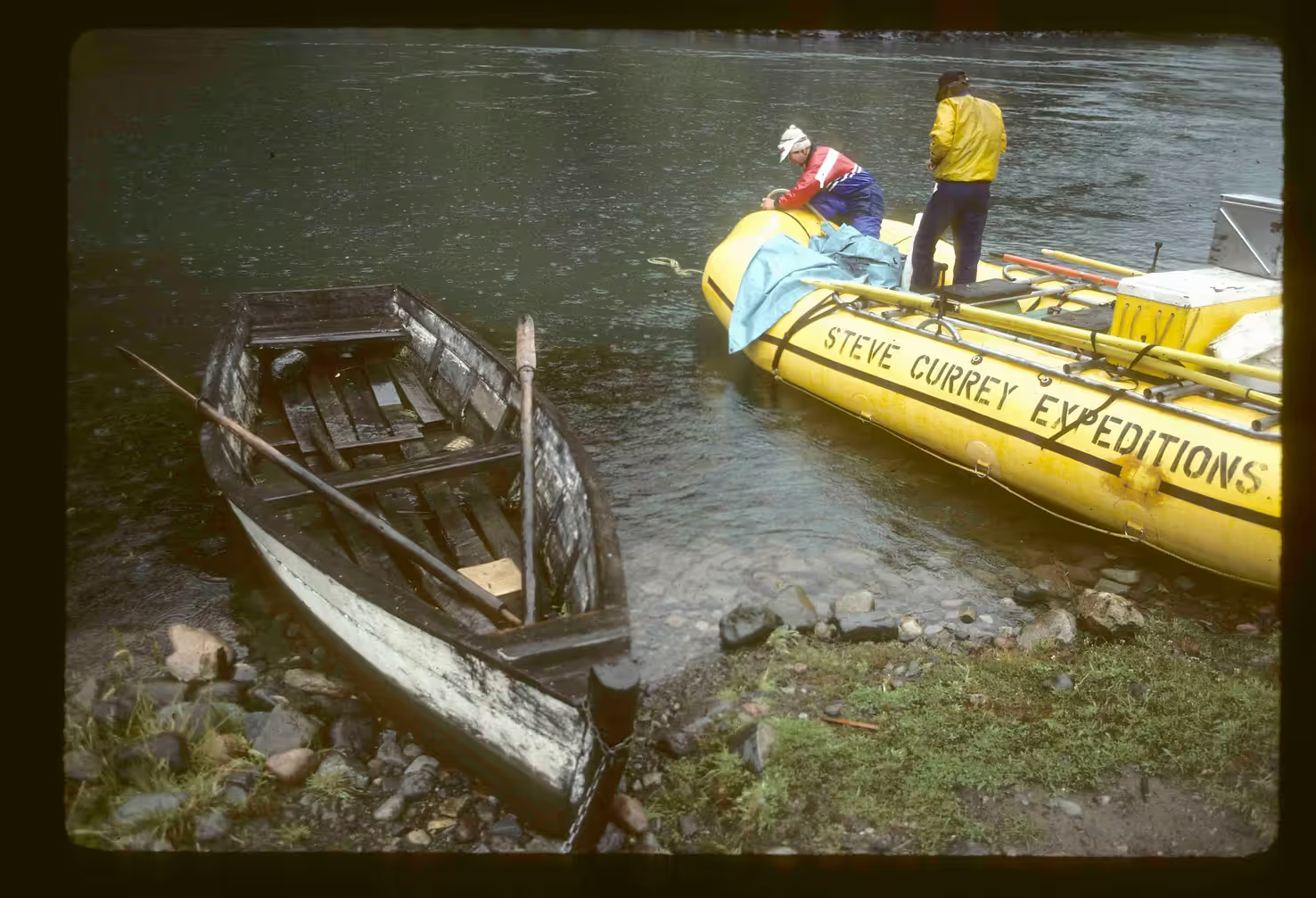
Then I started working for an outfitter named Steve Curry who was running the Bío Bío, and we knew the Bío Bío was going to be dammed within a few years because they had a huge hydroelectric project they were putting in. So he sent us south to look at a river they had identified on a topo map.
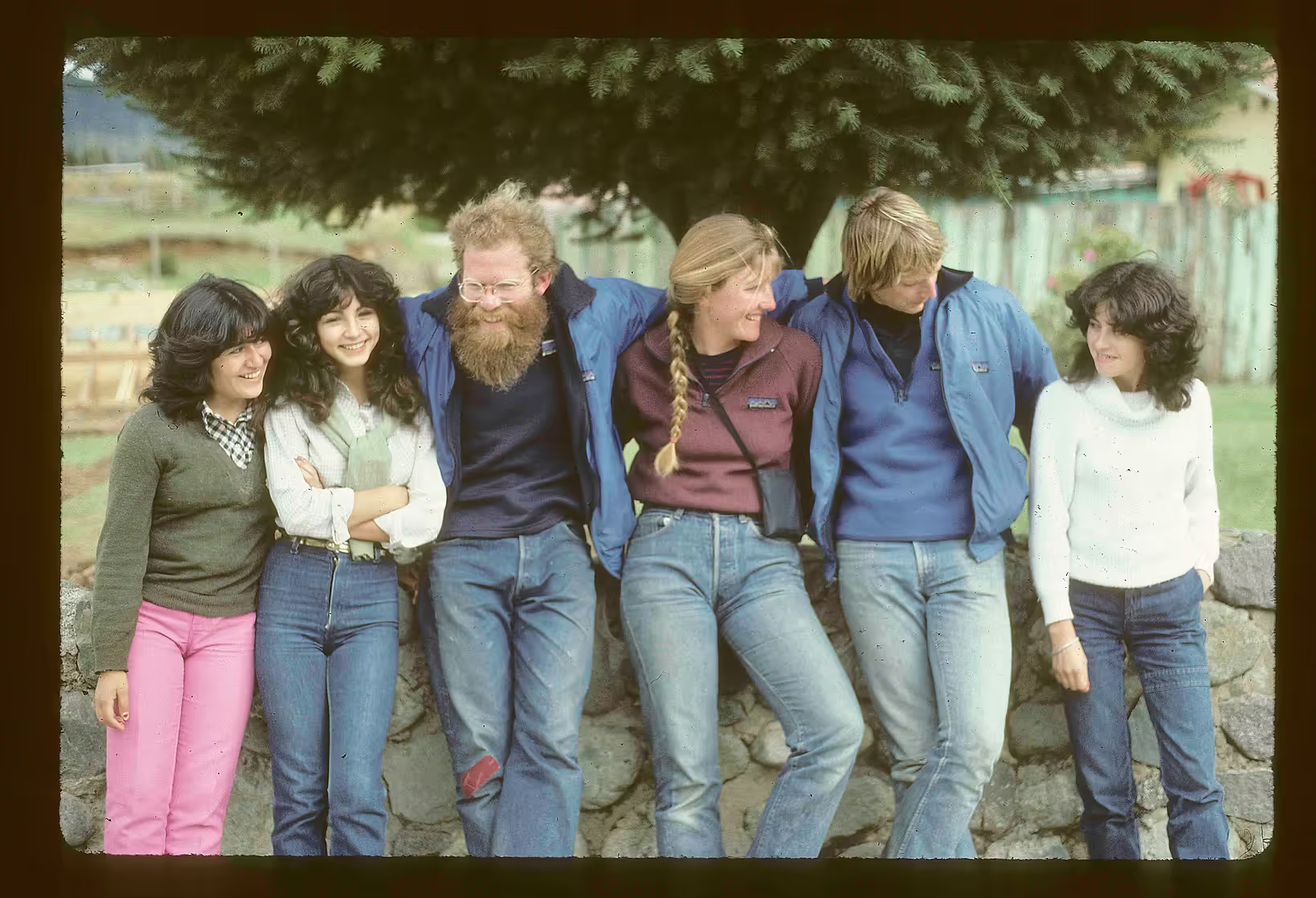
We were preparing to do the first descent, and Danny asked a group of American kayakers if they would come down and be safety boaters on our trip, but when Danny left to work a Bío Bío trip, the kayakers went down and ran the Futaleufú.So they did the first descent, but we never talked to them before they left the country. So for us it was definitely a first descent experience.
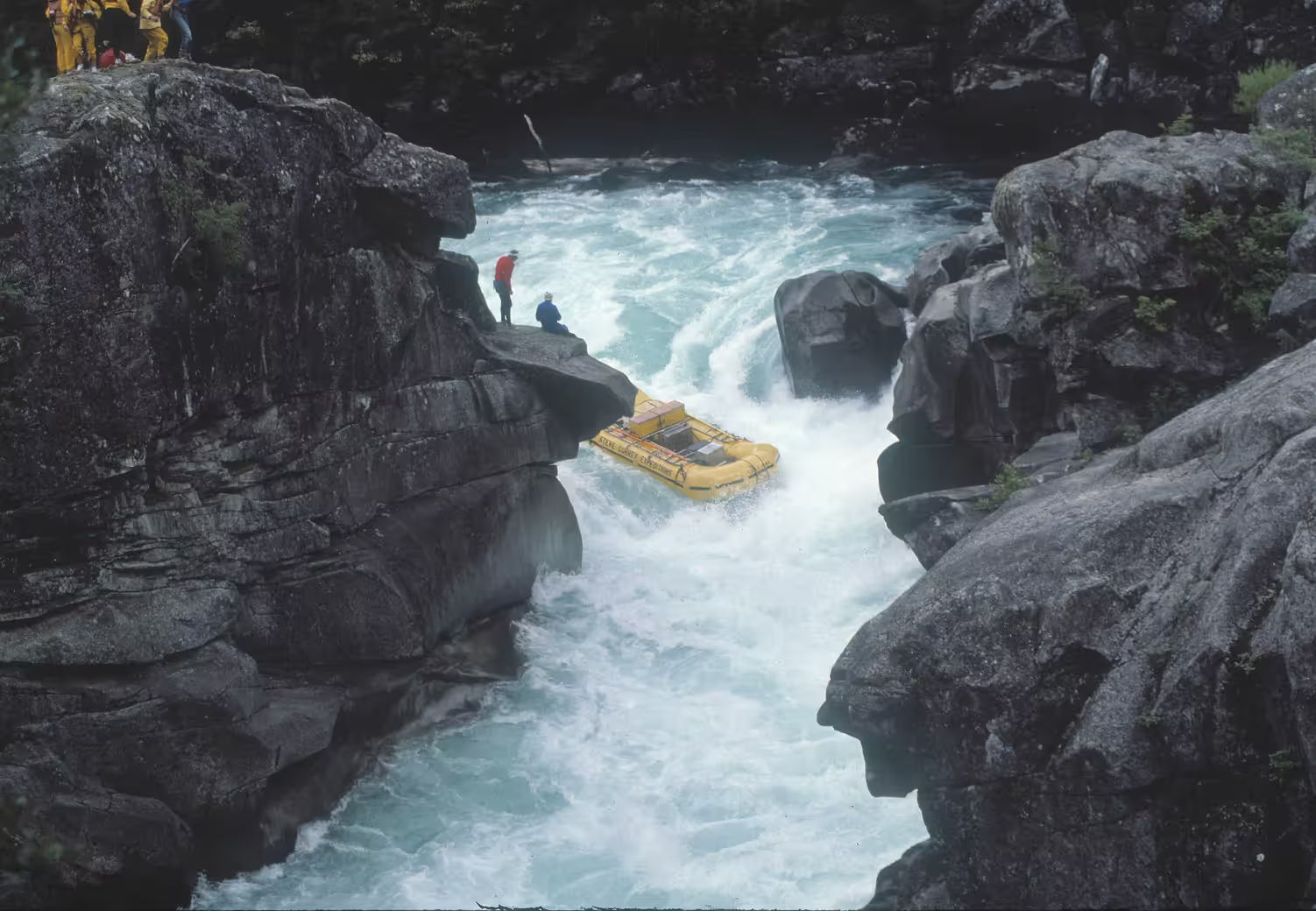
And we ran the Futaleufú at flood level. We didn’t even recognize that fact because it was the only level we had ever seen it at. We ran it at a water level higher than any commercial outfitter would put anybody on. Top kayakers might do it at that level, but it’s not a level that’s run by outfitters.
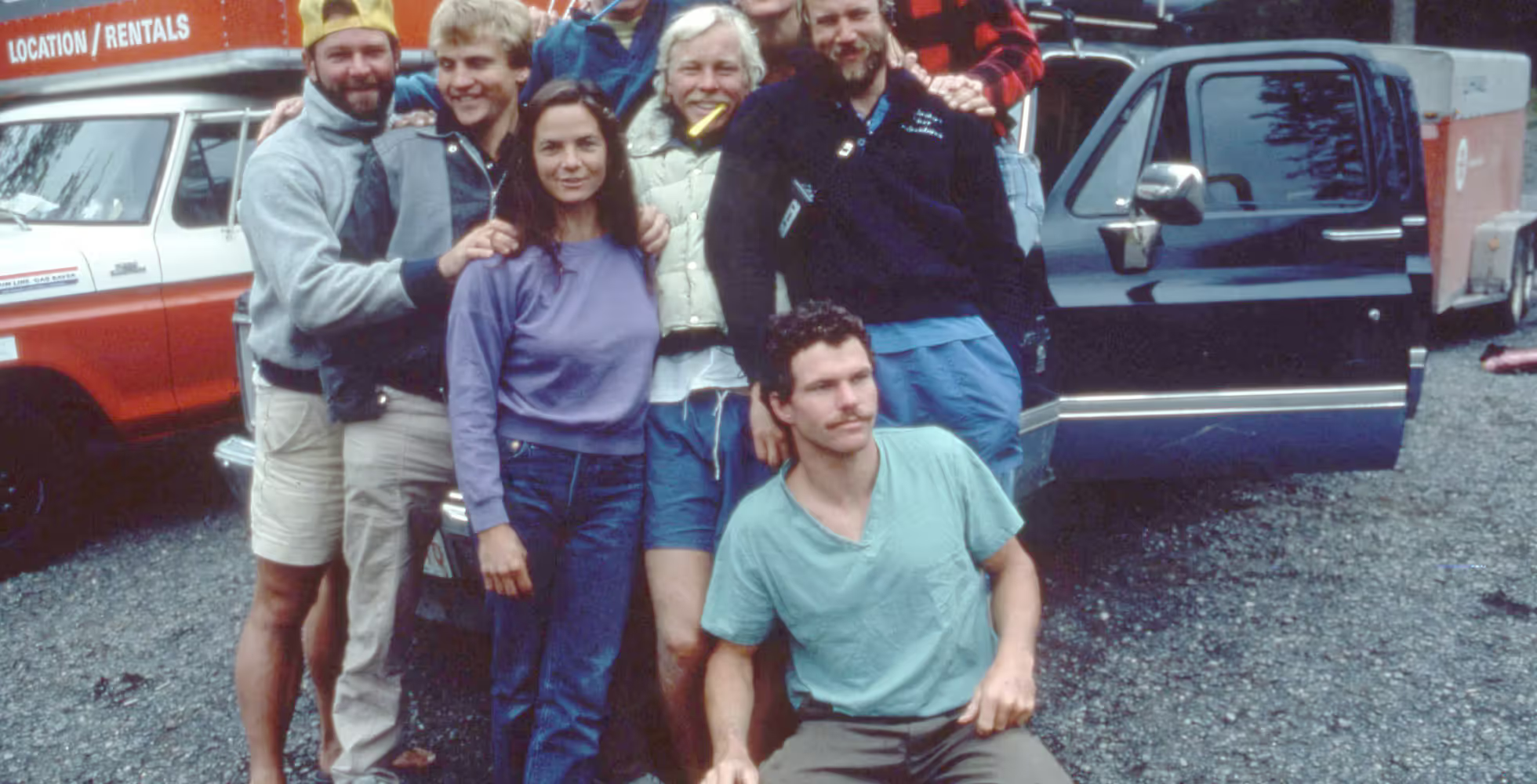
Then from that, somehow Danny and I had enough of a reputation that when somebody was putting together a crew to run the Grand Canyon of the Stikine in 1985, we were asked to join that expedition. We were part of the crew that rafted a significant portion of the Stikine, but not all of it. It was the first raft descent, and I think it still stands as the farthest any rafts have gotten down that river except for a Creature Craft.
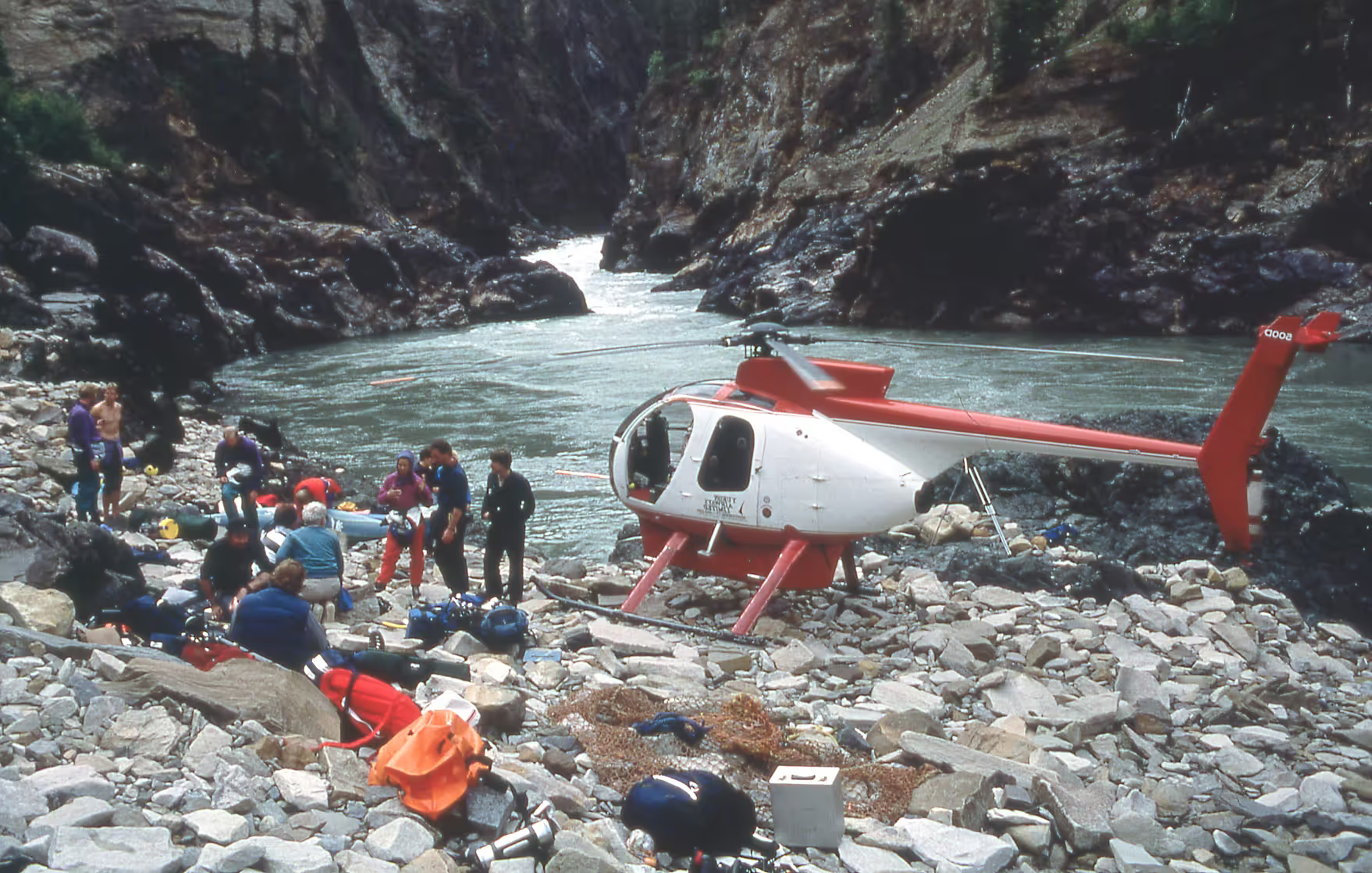
We ran everything down to Wasson’s Hole. We were helicopter supported. We were airlifted down to a place where we were able to run some rapids in the lower canyon, particularly the Garden of the Gods. If you go on YouTube and search for “1985 Grand Canyon of the Stikine,” the television movie that was made from that expedition is still there.
We did get down to Site Zed. The kayakers were the first to run the whole thing under their own power. They either paddled the rapids or portaged their own boats around the others. We got down to Site Zed by helicopter and put our names on the blackboard. Somebody has erased and reorganized it since then, but our names are there.
Willie: What was it like knowing the Bío Bío was going to be dammed?
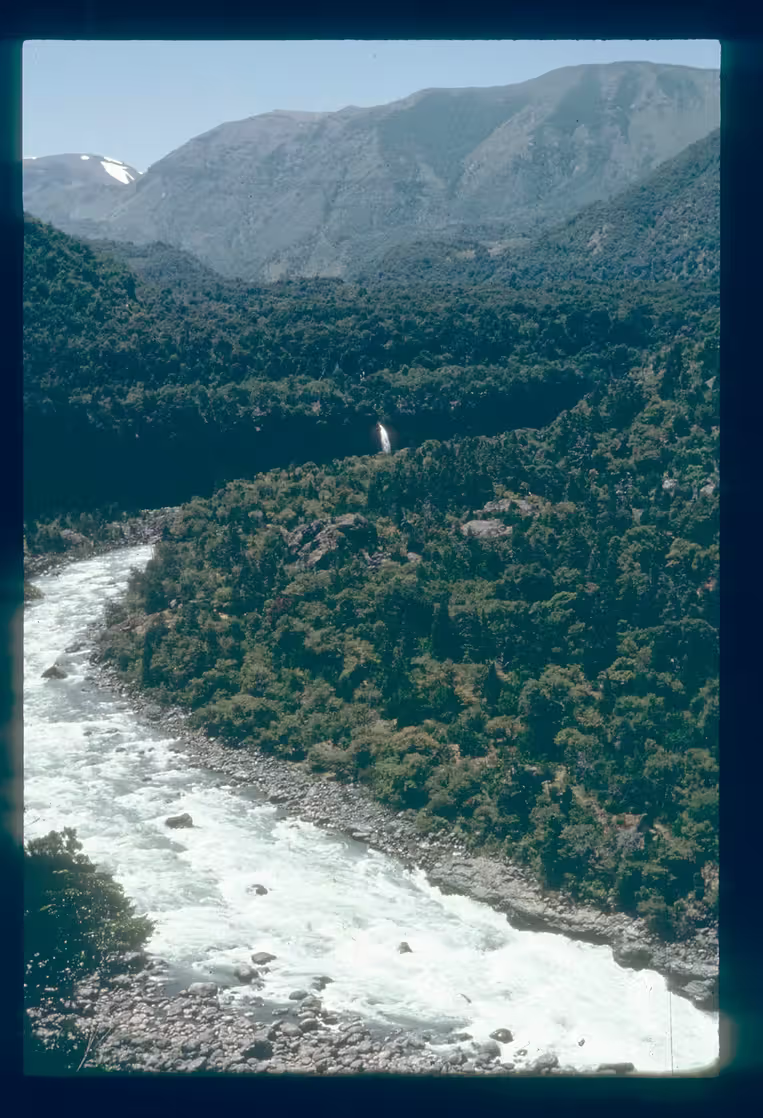
Peter: Everybody was sad for sure. And Steve Curry was looking around for something else to do — that’s how he got down to the Futaleufú. It was very sad. There was nothing you could do about it. It was hard to stomach.
My first trip on the Bío Bío at that really high water — honestly, I was scared shitless. I was running with guides I’d only known for two weeks. They looked at the river and said, “Okay, we’re going to run it,” and my world turned upside down.
Only with good luck and a little bit of technique that they didn’t really know how to use did we get down. We were in Avon Pro bucket boats. It was a very scary day. And once we finally figured it out and got through it, it was an unbelievable feeling.
As a boater, there are different degrees of scared. That was up there.
Willie: How have those experiences shaped your life since?
Peter: That’s a great question.
I’ve had a very full life. I had another career. I had a family. My kids grew up river running. Now they’ve moved on to their careers. I have grandkids.
Doing those really hard, pushed-to-the-limit rivers was a fierce kind of fun. I loved it. What was most important to me was that it put me into present time — totally focused present time flow. That’s a state of mind that I’ve tried to get back to ever since.
After I went back to running the Tuolumne and other rivers in California, my biggest goal has been to try to get back into that flow state. Rivers do a really good job of bringing me into present time. Even taking family trips and not doing really hard rivers anymore, my goal was always to get into that flow state — that sense of being one with nature, having a place where you feel like you belong in this force of nature that’s a river.
That’s been a very important part of my life ever since.
Willie: What’s the role of storytelling in protecting rivers?
"Stories are part of what human beings are about. We’re susceptible to stories. I hope that by telling compelling stories, more people will care about rivers." Peter Fox
Peter: If you start to care about something and love it, you’re going to want to protect it. Everybody has river stories. It doesn’t matter if they’ve gone down one trip on the South Fork of the American or run the Stikine. Those stories become part of who people are. You tell someone you’re a river guy and they immediately tell you their story — how they swam a rapid or what happened in a boat. You can tell it’s important to them.
Rivers create real events. There’s real risk. Real skill. Mental attitude. It makes you feel alive.
Willie: Are rivers alive?
Peter: I think rivers are alive. I think they have personalities. The Rogue River, where I taught for 15 years, has a distinct personality. The Tuolumne does. Other rivers I’ve known well do.
It’s a dynamic moving force. You have to treat it as alive because it’s full of movement and dynamism. You have to correspond to how you read the river and feel the river. That makes it feel very alive.
Willie: Do rivers speak for themselves, or do we speak for them?
Peter: I think we have to speak for rivers because the loudest voices in human history have been to dam them and use them as resources. They’re treated like commodities.
But anyone who really becomes familiar with rivers gets changed by that voice. And then it becomes our job to convey that.
Commercial rafting has done a good job of that because it’s taken so many people down rivers. Rivers speak for themselves if you give them the chance — if you listen, if you spend time in their canyons, if you become familiar with the movement of the water. They speak loudly.
It’s up to us to convey those messages to other people. Being sensitive to nature is part of being human. Rivers remind you of a kind of humanity that’s about listening and paying attention and being in harmony, rather than thinking of the world as resources to take from.
Willie: Tell us what your book is all about!
Peter: It took me ten years to write. I interviewed more than 80 river runners. I talk about the history of rowing going back to the 1890s. I talk about fear and flow and learning to work with the water instead of against it.
My stories are the connective tissue, but it’s a bigger story.
It’s a love story to rivers by someone who has been rowing them for 46 years and who has talked to many people whose lives have been changed by rivers.
All the royalties are being donated to three river conservation organizations — Yosemite Rivers Alliance, American Whitewater, and American Rivers.
I just hope people read it.
Here at RIVERS truly hope you do read it. You can find Peter’s website to order his freshly released narrative and dive deeper into his incredible photo archive there.